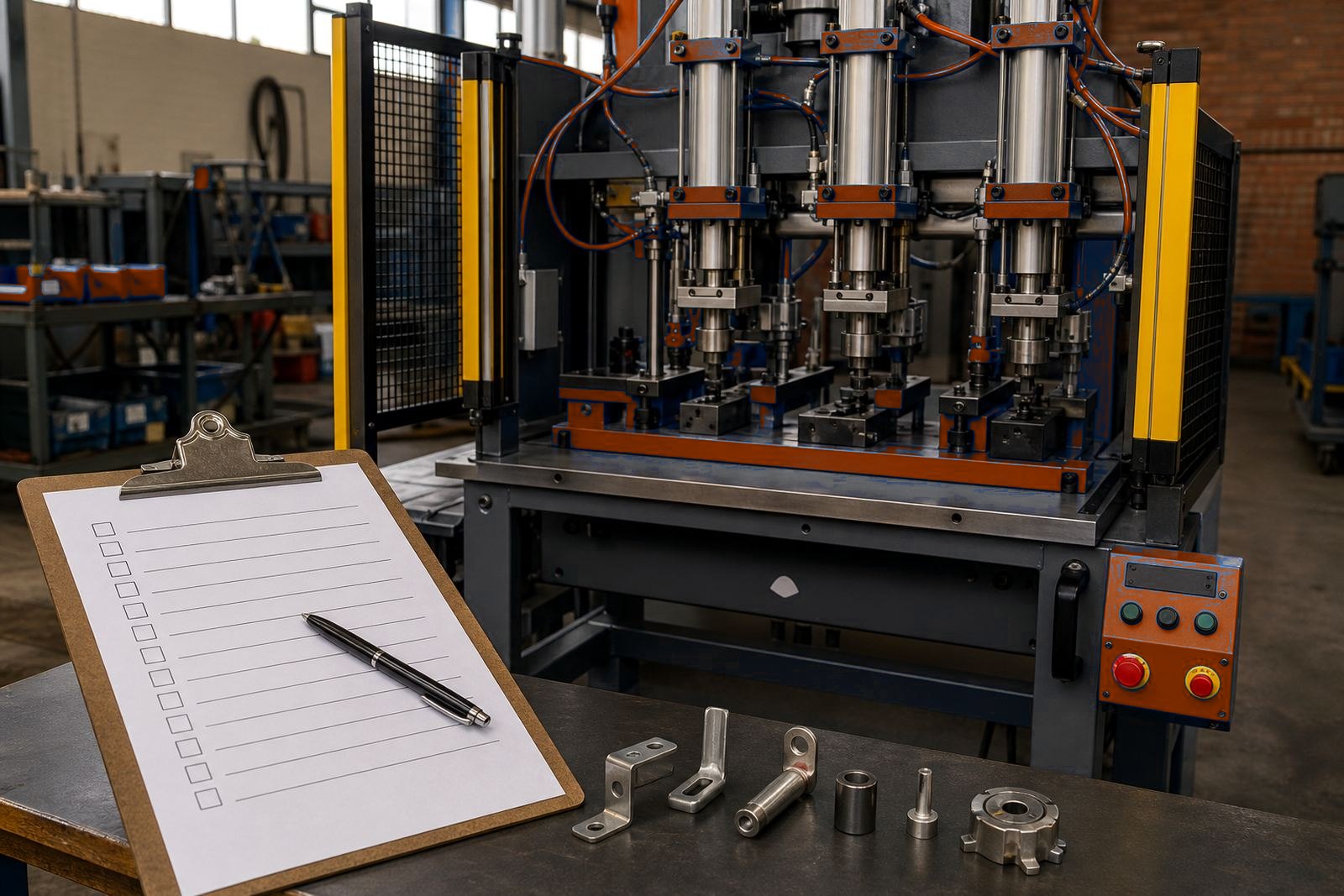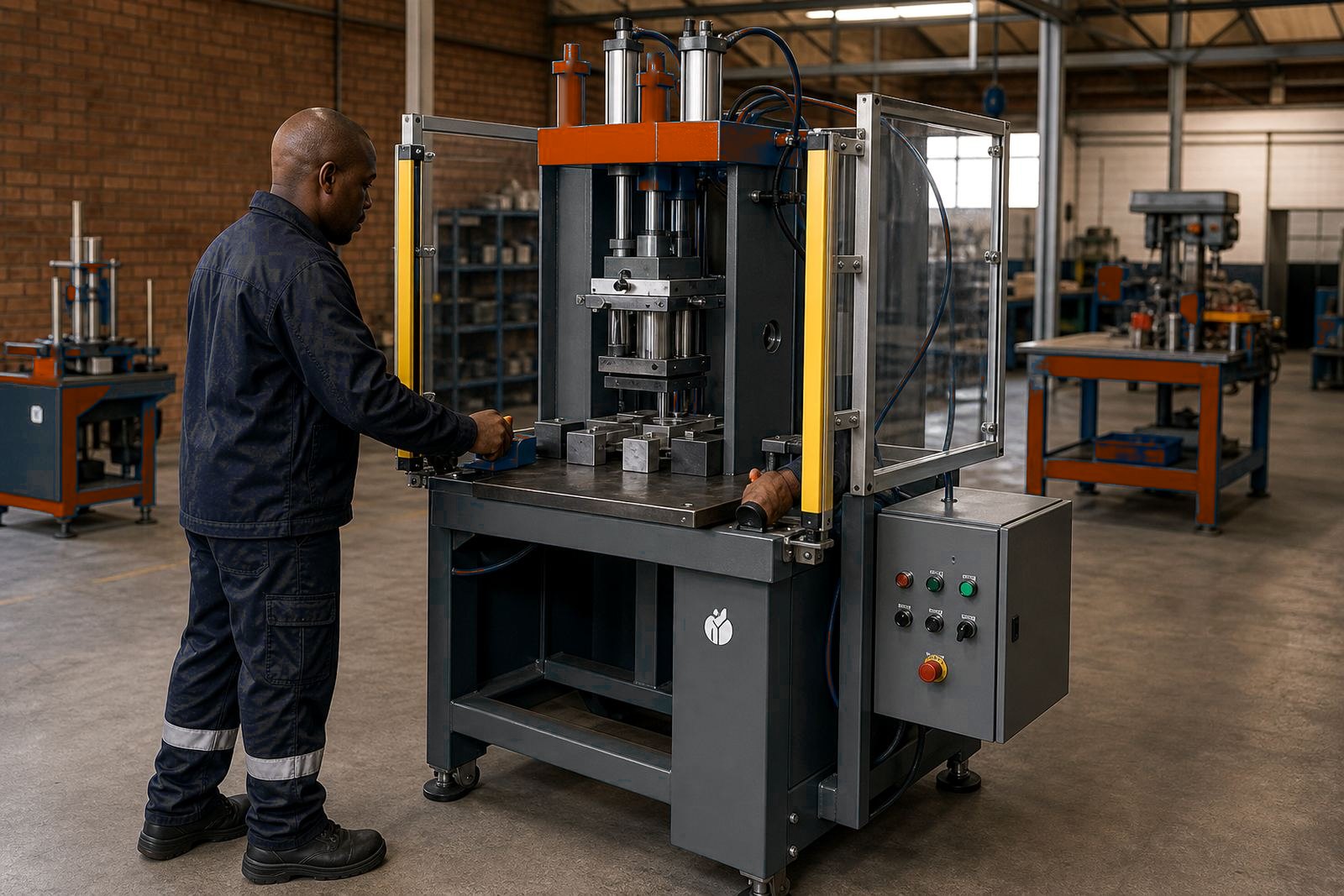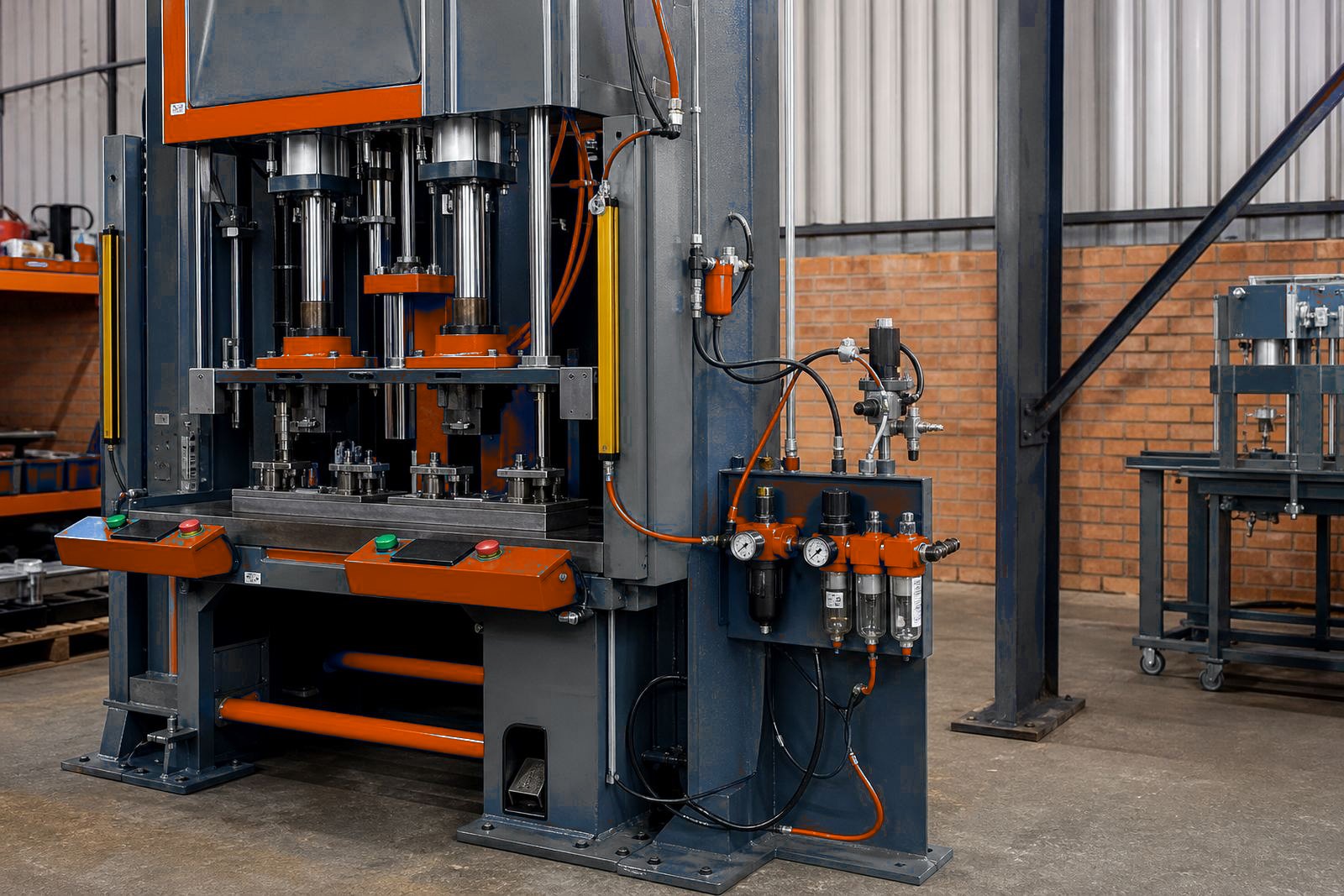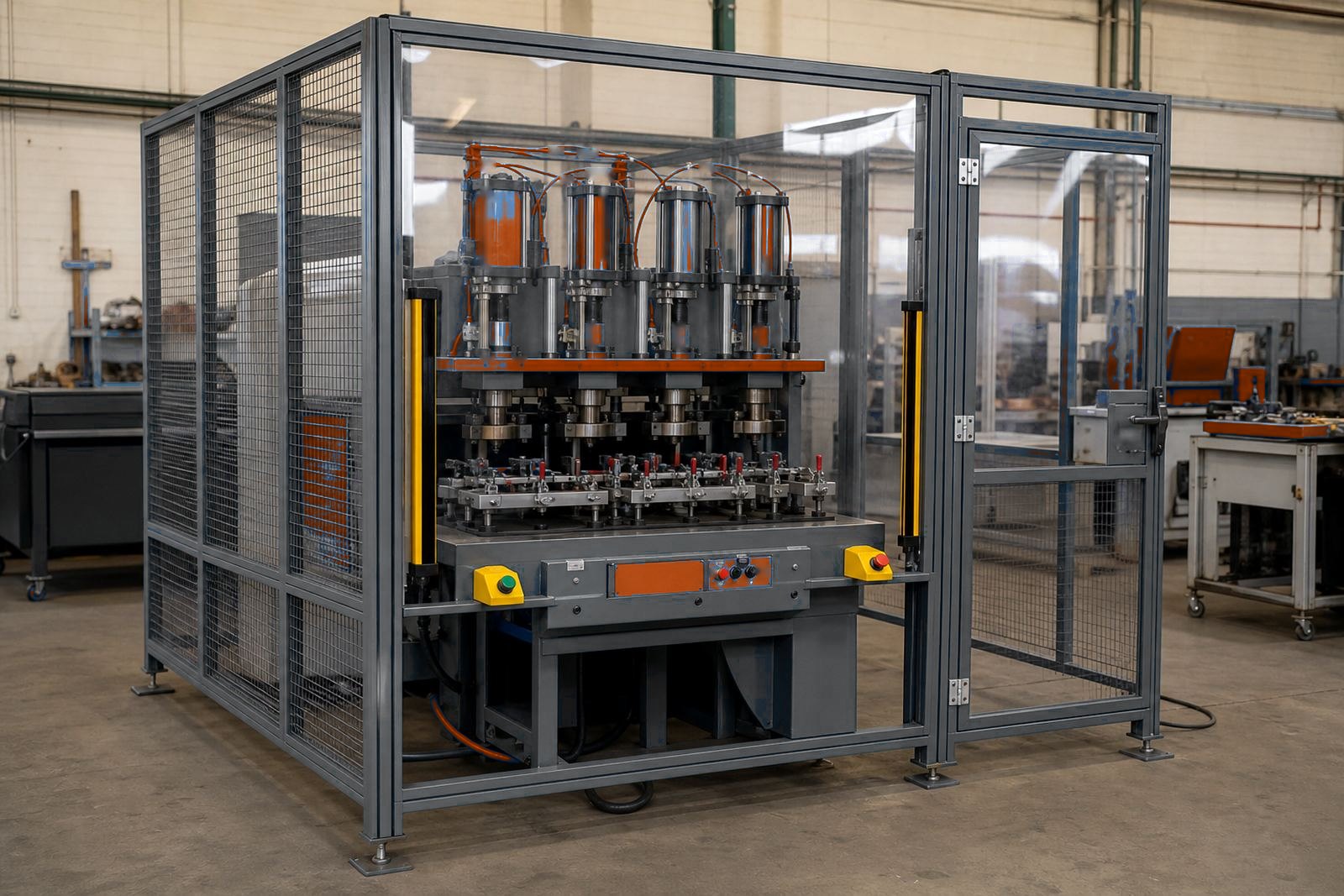
Guarding built to suit the press, not forcing the press to suit the guarding
Guarding on a pneumatic press has to do more than close off a hazard zone. It must leave room for loading, part presentation, visual checks and controlled exit points around the tooling. On multi-station machines, the layout changes with each station, especially where one station handles a crimp, the next a rivet set and the last a pack seal check.
We build guarding around the stroke, the clamp area and the normal hand path of the operator. That includes fixed panels where access should never happen, hinged or sliding access where tooling change is required, and clear viewing areas where the process needs to stay visible. On taller frames, we set guarding height and reach to suit the press bed and the working position, with the right cage size for the machine.
- Fixed guarding panels for permanent exclusion zones
- Access doors for setup and tool change work
- Clear sight lines to the active station
- Openings sized for the part, not for stray movement
What is included in a guarding build
A guarding package can include the full enclosure, support brackets, door hardware, interlocks, viewing panels and the mounting points needed for future tooling changes. Where a line uses two-hand controls or light curtains, the guarding is arranged so the operator stands in a sensible position and the sensing devices cover the working area without fighting the job flow.
We also look at air pressure, stroke length and the speed of the cycle when setting the barrier line. A short stroke on a compact press needs a different protection pattern from a longer stroke on a deeper frame. If the machine runs at higher pressure or with heavier tooling, the guarding must allow safe separation without making routine handling awkward.
- Guard frame fabrication in steel or other suitable sections
- Perspex or mesh viewing panels where visibility matters
- Interlock points for access doors and service panels
- Mounting positions for two-hand controls and light curtains
How the work moves from layout to fit-up
We start by looking at the press stations, the tooling shape and the way parts move in and out of the machine. The workshop then prepares the guarding sections to suit the actual footprint, which matters on multi-station presses where one side may need more access than the other. A guarding line that looks neat on paper can become clumsy if the operator has to stretch or twist around it all day.
Fit-up includes checking door swing, latch positions, sensor mounting and the practical path for tooling changes. On site we align the guarding with the press frame, set the access points and test that the operator can load the part without brushing into moving components. Where required, the guarding is tied into the light curtain or two-hand control arrangement so the machine and the enclosure work as one system.
- Site measure and station review
- Workshop fabrication and trial fit
- On-site alignment and final adjustment
- Functional check with the press in cycle
Spec choices that matter on real production lines
Guarding for a pneumatic press is shaped by the job, not by a catalogue. A pack sealing line may need easier access and clearer viewing, while a riveting station may need a tighter exclusion zone near the ram and tooling tip. On presses used for assembly, the opening size must allow the operator to place components cleanly without exposing hands to the stroke path.
We work with practical dimensions and clearances, usually set around the bed, the tooling envelope and the working height of the team. Where coastal humidity is part of the operating environment, material and finish selection also matter because surface condition affects wear, appearance and upkeep. The result should still be easy to inspect, easy to clean and strong enough for daily use.
- Press stroke and ram travel
- Number of stations and access needs
- Tooling envelope and part size
- Required visibility and operator reach
Turnaround, pricing and project shape
Guarding builds are priced around the size of the enclosure, the number of access points, the level of interlocking and whether the work includes new tooling support brackets or a full light curtain integration. A single press with one guarded station is not priced the same way as a multi-station line with separate access doors and controlled loading positions.
For larger factory work, we often plan the guarding in stages so installation does not interfere with every part of the line at once. That lets the workshop prepare sections cleanly and gives the site team a clearer sequence for fitment, testing and handover. The scope can also include air line setup, stroke setting and production handover where the guarding is part of a broader press project.
- Quotation based on dimensions, access points and control integration
- Fabrication sequence matched to the press layout
- Installation planned around the production floor
- Handover with operating checks and training notes
Aftercare once the guard is on the machine
After installation, the guarding should remain easy to live with. Doors need to close cleanly, interlocks must stay aligned and viewing panels should remain clear enough for operators and supervisors to inspect the process. If the tooling changes later, the guarding may need a minor tweak instead of a complete rebuild, so we keep the fit-up sensible from the start.
Our aftercare includes support with guarding changes, door hardware issues, sensor alignment and any press-side alteration linked to new tooling. Where the line is being reworked for a different part, we can review the opening size, access point and control position so the new setup still protects the operator without slowing the station down. That helps the guard stay useful after the first production run, not just on the day it was installed.
- Door and latch adjustment
- Interlock and sensor alignment
- Guard changes for new tooling
- Support during production handover
Key facts
| Service area | Isando, Ekurhuleni and factory sites across South Africa |
|---|---|
| Typical equipment | Multi-station pneumatic presses for assembly, crimping, riveting, staking and pack sealing |
| Guarding options | Fixed panels, access doors, viewing sections and integrated sensing points |
| Control integration | Two-hand controls and light curtain interfaces where required |
| Fitment inputs | Stroke, station layout, tooling envelope and operator reach |
| Project support | Site installation, adjustment, commissioning and operator training |