What stroke setting does on a press line
Stroke setting is the adjustment that controls how far the ram moves from top dead centre to the working point and back. On a multi-station pneumatic press, that travel must suit tool height, cavity depth, material springback and the shape of the finished part, otherwise the station can mark, pinch or miss the job altogether.
We set stroke travel for single-station units and for linked production cells where different stations carry different tooling. That includes presses used for crimping terminals, riveting small assemblies, staking plastic or metal bosses, and pack sealing work where consistent closure matters more than raw force.
- Travel matched to tooling height and part depth
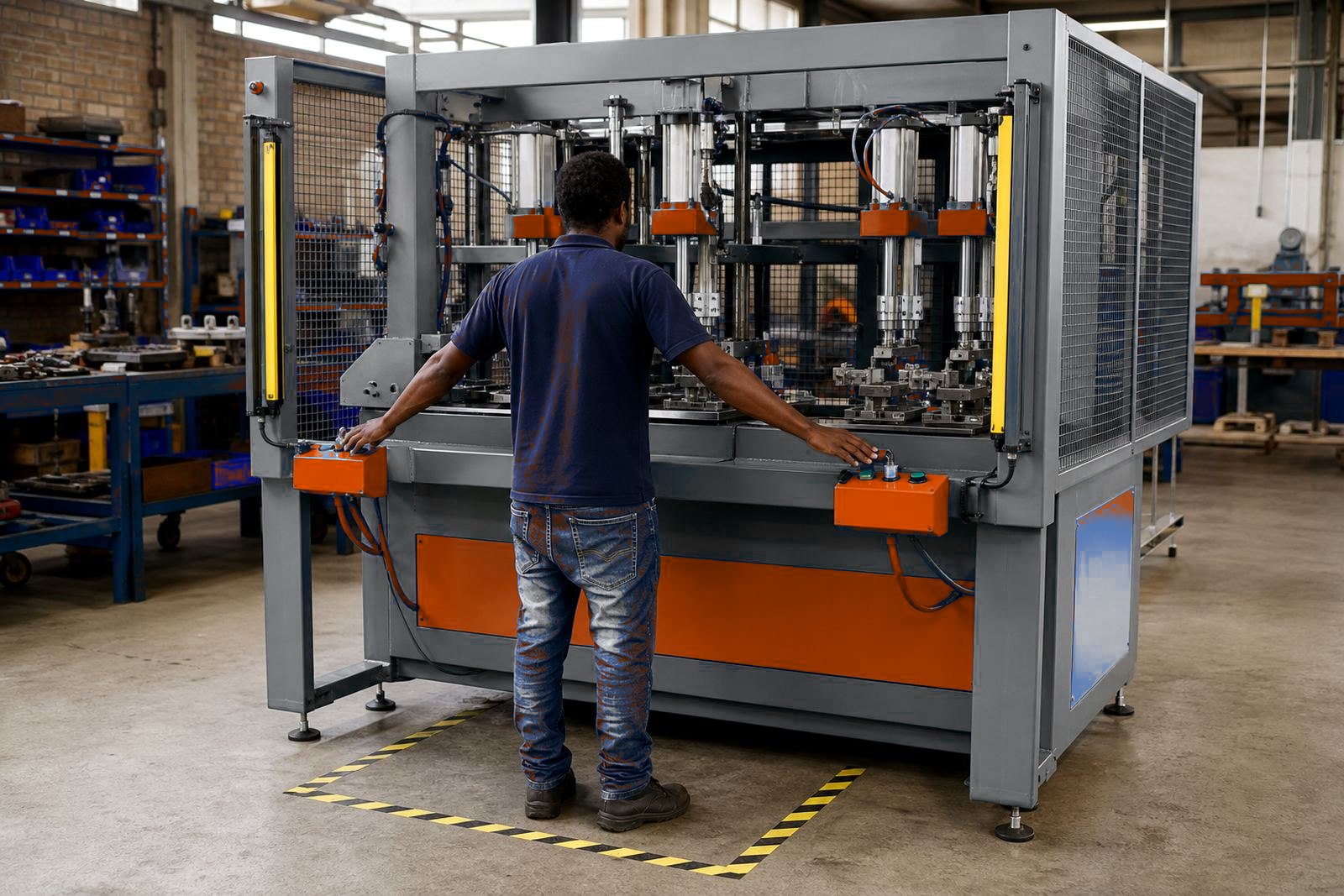
- Ram movement checked against guard openings and two-hand control timing
- Set-up aligned to cycle consistency across repeated parts
- Checks done for over-travel, bounce and incomplete return
What gets checked before the final setting
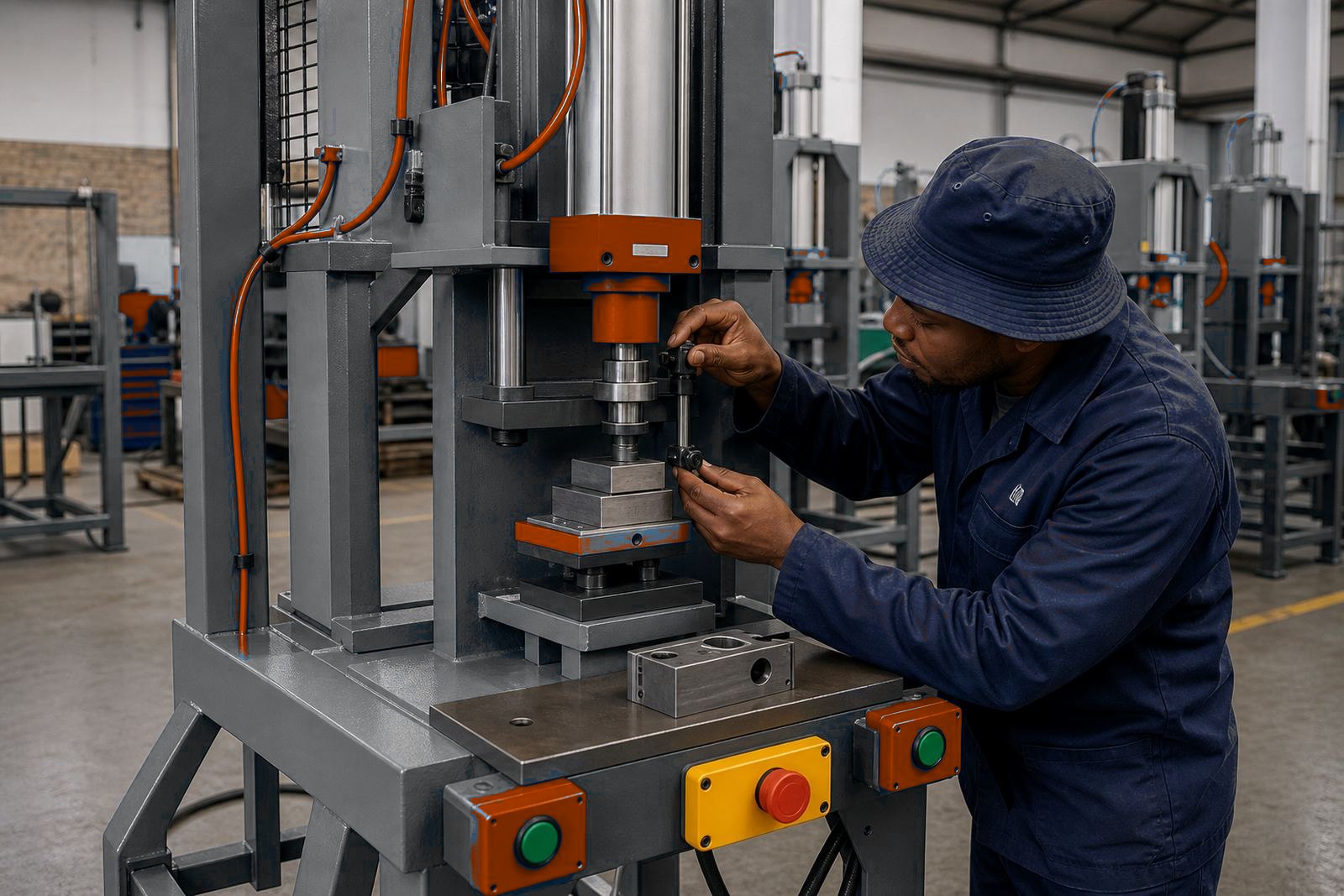
The job starts with the tooling in place, the part sample on hand and the press isolated for safe setup. We inspect cylinder action, guide movement, stop positions, air supply stability and whether the stroke range leaves enough room for load and unload at the station.
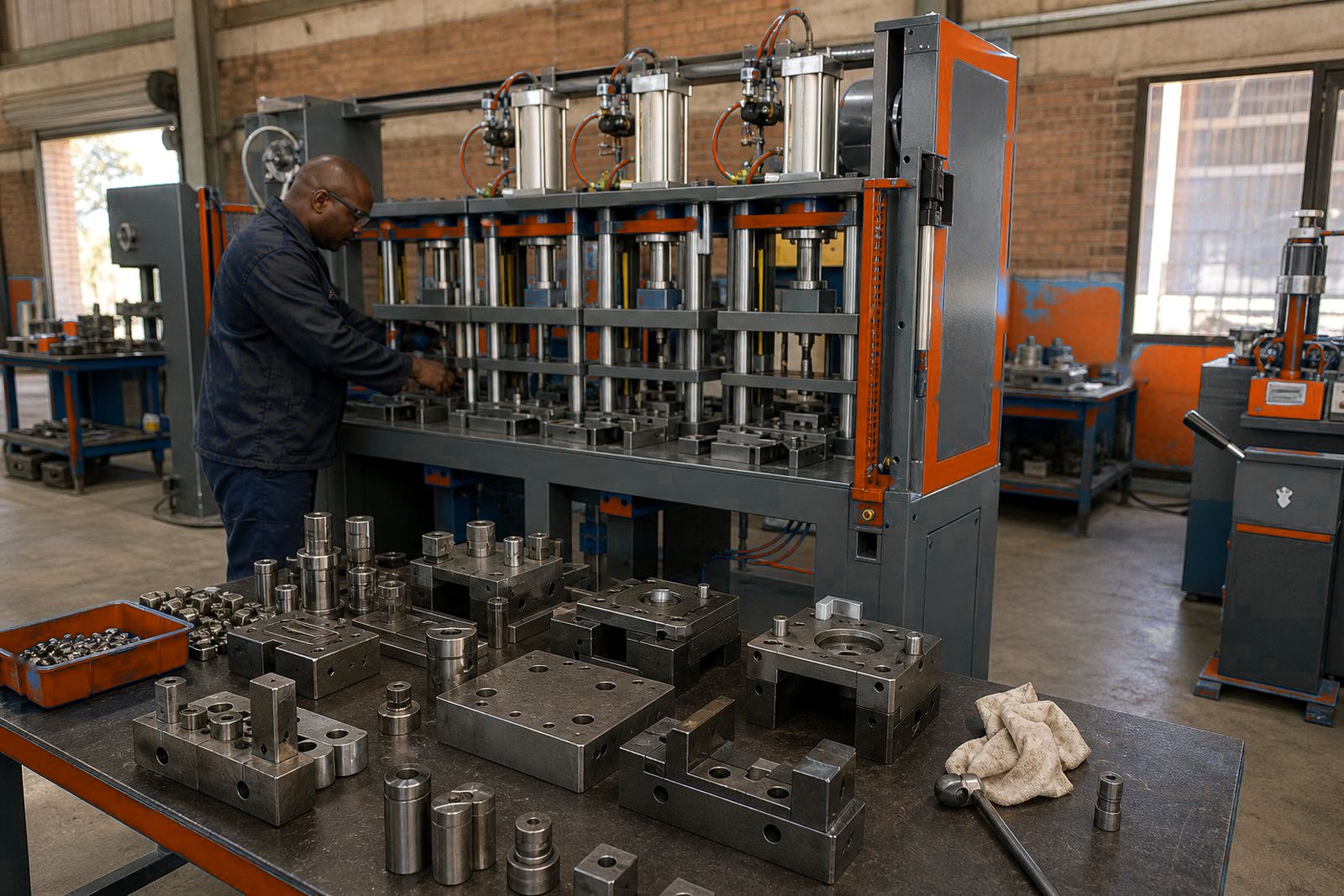
Where tooling changes are part of the day-to-day work, the stroke has to stay usable for more than one part family. A short stroke may improve speed, but if it closes too early the fixture cannot seat properly. Too much travel can slow the cycle, stress tooling and upset the hand position at the front of the press.
- Tool height and clamp position measured against the ram travel
- Air pressure reviewed so the stroke lands consistently under load
- Guarding, light curtains and two-hand controls checked around the set point
- Part sample used to confirm the crimp, rivet or seal is forming cleanly
We set stroke settings on site or in our workshop
Some presses can be set in the workshop before delivery, while others need site adjustment after installation and line integration. We work through the stroke range in small steps, then test the movement with the actual tooling.
If the station uses light curtains or two-hand controls, the stroke setting has to sit comfortably inside the safety logic and the operator workflow. We also check the return stroke so the operator gets enough clearance for the next part without leaning into the press envelope.
- Initial measurement against the tooling and fixture stack
- Incremental changes to the stroke stop or limit position
- Dry runs to check movement before loaded cycling
- Final part trials under normal production handling
Pneumatic press details that affect the setting
Stroke setting is never separate from the press spec. Cylinder bore, operating air pressure, ram size, table height, tooling mass and guide condition all shape the result. On a multi-station build, each head may need its own setting if the stations do not carry identical tooling or part depth.
We commonly work with press strokes in the practical range used by South African factories for light to medium assembly work, where the travel has to be long enough for insertion and short enough to keep the line moving. If the tool needs a controlled final squeeze, the stroke must end where the forming action finishes, not past it.
- Cylinder force matched to the job and the available air supply
- Stroke length set to suit shallow or deep components
- Guide and ram movement checked for drift or side load
- Tooling clearances verified at full open and full close positions
What the service includes
Stroke setting is supplied as part of a wider press commissioning job or as a focused adjustment on an installed machine. We prepare the press, make the movement changes, run the part samples, and hand the station over once the travel, safety devices and tooling behaviour are aligned.
The service suits plants in Isando, Kempton Park, Boksburg, Johannesburg, Pretoria, Durban, Gqeberha and East London where pneumatic presses are used on repeat production lines. Where the line has several stations, we can set each head to suit its own tool stack and operating rhythm.
- Stroke adjustment for new tooling or changed part geometry
- Set-up support for assembly, crimping, riveting, staking and sealing work
- Checking of two-hand controls and light curtain position
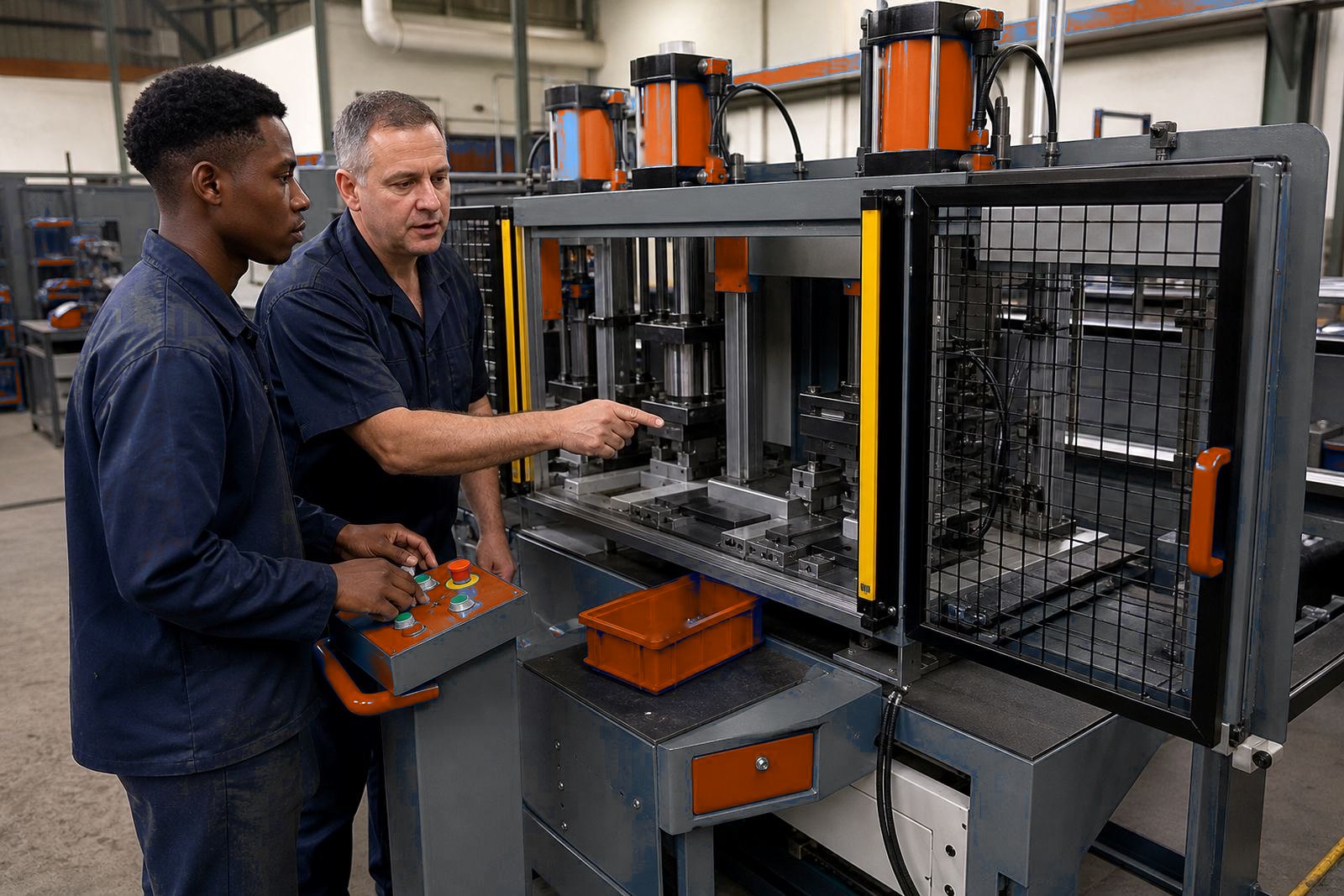
- Production handover with the operator shown the working range
Pricing, lead times and aftercare support
Pricing depends on the press size, number of stations, the condition of the existing setup and whether stroke setting forms part of a wider commissioning or installation job. A straightforward adjustment costs less than a line where tooling, guarding and air setup all need rework, so we price to the actual scope.
Lead times vary with access to the machine, the amount of testing needed and whether the job is in our Isando workshop or at your factory. Aftercare includes support for later tooling changes, fine tuning after production trials and practical guidance for operators who need a cleaner handover on the line.
- Quoted to the press condition and the work required
- Can be bundled with tooling changes or guarding builds
- Useful after part redesigns, reworked fixtures or new station layouts
- Support available for follow-up adjustment when production needs change
Key facts
| Service | Stroke Setting |
|---|---|
| Main use | Adjustment of ram travel to suit tooling height, part depth and cycle consistency |
| Press type | Multi-station pneumatic presses |
| Typical work | Assembly, crimping, riveting, staking and pack sealing |
| Safety interfaces | Two-hand controls and light curtains |
| Coverage | Isando, Gauteng and factories across South Africa |